

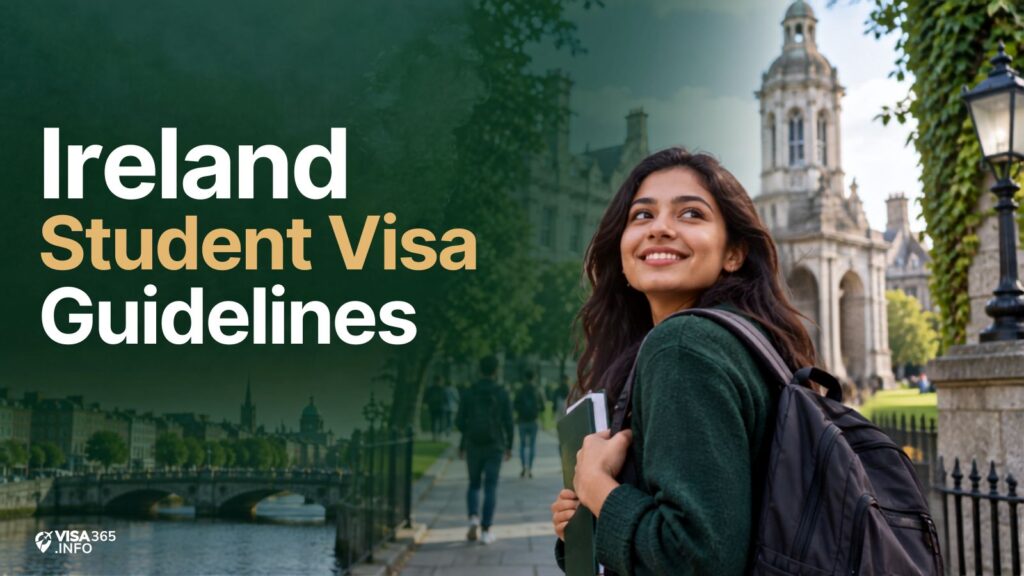



Ireland Student Visa: A Complete Guide for International Students (2026)
-
Engr. M Umar Gulzar / 1 week
- September 11, 2026
- 10 min read

Ireland has quietly become one of the most popular places in Europe for international students. Excellent top class universities, courses taught in English, and decent job prospects after graduation, it’s easy to see why. But before you can pack your bags, you need to get your student visa sorted, and that part can feel confusing if you don’t know where to start.
This guide walks you through everything in plain language: who needs a visa, what documents you’ll need, how much it costs, what courses are available, and even a bit about scholarships.
What Exactly Is an Ireland Student Visa?
Simply put, it’s the permission you need to enter Ireland and study full-time if you’re not from the EU, EEA, UK, or Switzerland. If you already hold a passport from one of those places, you’re free to study in Ireland without applying for a visa (though you’ll still need to register locally).
For everyone else, there are two types of visas to know about:
- C Study Visa – for short courses or exams, usually under 90 days.
- D Study Visa (Long Stay) – for anything longer than 90 days, which covers most bachelor’s, master’s, and PhD programs.
One thing that trips people up: your course has to appear on Ireland’s Interim List of Eligible Programs (ILEP). If it’s not on that list, your visa application won’t go through, no matter how strong the rest of your file is. You can confirm your course status and read the official study visa rules directly on Ireland’s Immigration Service Delivery website before you apply to a college.
Do You Actually Need a Visa?
It depends on where you’re from and how long your course runs. Students from India, Pakistan, Nigeria, Bangladesh, and most countries across Asia, Africa, and the Middle East will need a D Study Visa for any course longer than 90 days. If you’re doing a short English course or sitting an exam that takes less than three months, a C Study Visa is usually enough.
What Do You Need to Qualify?
Immigration officers are basically checking that you’re a genuine student who can support yourself and plans to actually study, not just use the visa as a way into the country. To meet that bar, you’ll typically need to show:
- A full-time offer letter from a recognised Irish college or university
- A course that’s listed under Ireland’s National Framework of Qualifications
- Academic results that meet the entry requirements for your program
- English test scores (IELTS, TOEFL, PTE, or Duolingo are all accepted)
- Enough money to cover your tuition and living costs
- Some proof that you intend to return home once your studies are done
How Good Does Your English Need to Be?
Since nearly every course is taught in English, you’ll need to prove your language skills. As a rough guide, undergraduate courses usually ask for an IELTS score around 6.0, while master’s programs often want 6.5 or higher. A few competitive courses set the bar even higher, so it’s worth checking with your specific university.
Documents You’ll Need to Gather
This is usually where people either speed things up or slow themselves down. Having everything ready and correctly formatted makes a real difference. Here’s what you’ll typically need:
- A valid passport (with at least six months left before it expires) and a few passport photos
- Your offer or admission letter from the Irish institution
- Proof that you’ve paid your tuition fee or deposit
- Bank statements or a sponsorship letter showing you can afford to study there
- Transcripts and certificates from your previous education
- Your English test results
- Private medical insurance, unless your school already includes it
- A short cover letter explaining why you chose this course and college
- An honest explanation of any previous visa refusals or gaps in your education, if that applies to you
How Much Money Do You Need to Show?
This is one of the most closely checked parts of any application, so it’s worth getting right. If your course runs longer than eight months, you’ll generally need to show you have at least €10,000 available for living expenses in your first year, and this is separate from tuition. For shorter courses, the amount is prorated to roughly €833 per month you’ll be staying.
Also, make sure your offer letter clearly shows that you’ve already paid the minimum required portion of your tuition fee. Immigration officers look for this specifically, and a vague or missing payment confirmation is a common reason applications get delayed.
You can show your funds through your own bank statements, a sponsor’s statements along with a signed affidavit, or a scholarship letter if you’ve been awarded one.
The Application Process, Step by Step
- Get your offer letter from an ILEP-listed college and pay your tuition deposit.
- Apply online through Ireland’s AVATS system, following the official step-by-step long-stay study visa guide, with your personal, academic, and travel details.
- Pay the visa fee, around €60 for single-entry and €100 for multiple-entry (always check current pricing, as fees do change).
- Submit your documents, either online or at your nearest visa application centre.
- Attend an interview if asked to – not everyone gets called in, it depends on the officer reviewing your file.
- Wait it out. Processing typically takes 4 to 8 weeks, sometimes longer during busy intake periods.
- Once you land in Ireland, register with immigration within 90 days and get your Irish Residence Permit (IRP). This step is mandatory for anyone on a long-stay visa, and the full process is explained on Citizens Information’s student visa page.
A good rule of thumb: start your application two to three months before your course begins. Leaving it too late is one of the most avoidable mistakes students make.
What Can You Actually Study?
International students on a study visa can enrol in pretty much any level of program recognised under Ireland’s qualifications framework:
- Higher Certificate courses (around two years)
- Bachelor’s or Honours degrees (three to four years)
- Postgraduate diplomas
- Master’s degrees (one to two years)
- PhD programs (three to four years)
- English language and foundation courses for students who need to build up their skills first
The most popular subjects tend to be computer science, data analytics, business, pharmaceutical sciences, engineering, and healthcare, which makes sense, given how strong Ireland is in those industries.
What’s It Going to Cost You?
Tuition varies a lot depending on the school and course. Roughly speaking, undergraduate degrees run between €10,000 and €25,000 a year, while master’s programs (especially in business or STEM fields) can go from €12,000 up to €35,000, with some specialised MBAs costing even more.
Living costs matter too. Dublin is noticeably more expensive than smaller cities like Galway, Limerick, or Cork, so it’s worth factoring that into your budget alongside tuition. If you’re weighing up Ireland against other countries in Europe, our guide to studying across Europe breaks down how costs and visa rules compare elsewhere.
Is There Any Scholarship Help?
Yes, a few options are worth looking into:
- Government of Ireland International Education Scholarships – aimed at high-achieving students, covering tuition and a living stipend
- University scholarships – many Irish colleges offer their own merit-based funding that can knock a good chunk off your tuition
- Subject or country-specific scholarships – sometimes tied to research areas or bilateral agreements between Ireland and your home country
International Scholarship availability changes often, so check directly with your shortlisted university’s international office rather than relying on older information you might find online.
Can You Work While Studying?
Most full-time students get a Stamp 2 permission, which lets you work up to 20 hours a week during term time and up to 40 hours a week during holidays like summer break. It’s a decent way to cover some living costs and get a bit of local work experience, especially in retail, hospitality, or admin roles that are common in student cities.
Why Consider Ireland in the First Place?
- Universities with solid international rankings, especially in business and tech
- Everything taught in English, so no need to learn a new language
- Big global tech and pharma companies are based there, which helps with job prospects after graduation
- Post-study work options for eligible graduates who want to stay on and gain experience
- A generally safe, friendly place to live, with a large international student community already in place
Why Applications Get Rejected
A few patterns show up again and again in refused applications:
- Financial documents that are unclear or don’t add up
- Tuition payment not properly shown on the offer letter
- Unexplained gaps or inconsistencies in academic history
- Not enough evidence that you intend to return home afterward
- Missing or messy paperwork
Most of these are avoidable with a bit of care. Go through your documents like an immigration officer would, and fix anything that looks incomplete before you submit.
Final Thoughts
Studying in Ireland can genuinely open doors, academically and career-wise, but it starts with getting your visa application right. Confirm your course is ILEP-listed, get your finances in order early, and don’t leave your application until the last minute. And if you’re still deciding between Ireland and other destinations, take a look at our European student visa guides to compare your options before committing.
FAQs
Do I need a visa to study in Ireland?
If your passport isn’t from the EU, EEA, UK, or Switzerland, and your course runs longer than 90 days, yes, you’ll need a D Study Visa. Shorter courses may only need a C Study Visa. EU, EEA, and Swiss citizens don’t need a visa but still have to register locally.
How much money do I need to show for an Ireland student visa?
For courses over eight months, you’ll need to show at least €10,000 available for your first year’s living costs, on top of tuition. Shorter courses require a smaller, prorated amount based on how long you’re staying.
How long does the visa take to process?
Usually 4 to 8 weeks, though it can take longer during busy application periods. It’s best to apply two to three months before your course starts, just to be safe.
Can I work while studying in Ireland?
Yes. Most students can work up to 20 hours a week during term and up to 40 hours a week during holidays, which helps cover day-to-day expenses.
Will I need to attend an interview?
Not necessarily. Interviews aren’t required for everyone, they’re usually only requested if the visa officer needs more clarification on your application.
What does the visa actually cost?
Around €60 for a single-entry visa and €100 for multiple-entry, though it’s always worth checking the current fee before you apply since these can change.
Are there scholarships for international students?
Yes. Options include Government of Ireland scholarships, university-specific funding, and some subject or country-based scholarships. It’s best to check with your chosen university directly, since offerings change from year to year.
What do I need to do after I arrive in Ireland?
You must register with local immigration within 90 days of arriving. This is a required step for anyone on a long-stay student visa and confirms your legal status while you study.
Disclaimer: This guide is for general informational purposes only and does not constitute legal advice. Visa requirements may change. Always verify with official government sources.
Was this article helpful?
Thanks for your feedback 💛 It helps us improve our guides.