


France Business Visa: For Attending Meetings, Conferences, or Short Professional Assignments
-
Adeel Gulzar / 4 months
- July 6, 2026
- 9 min read

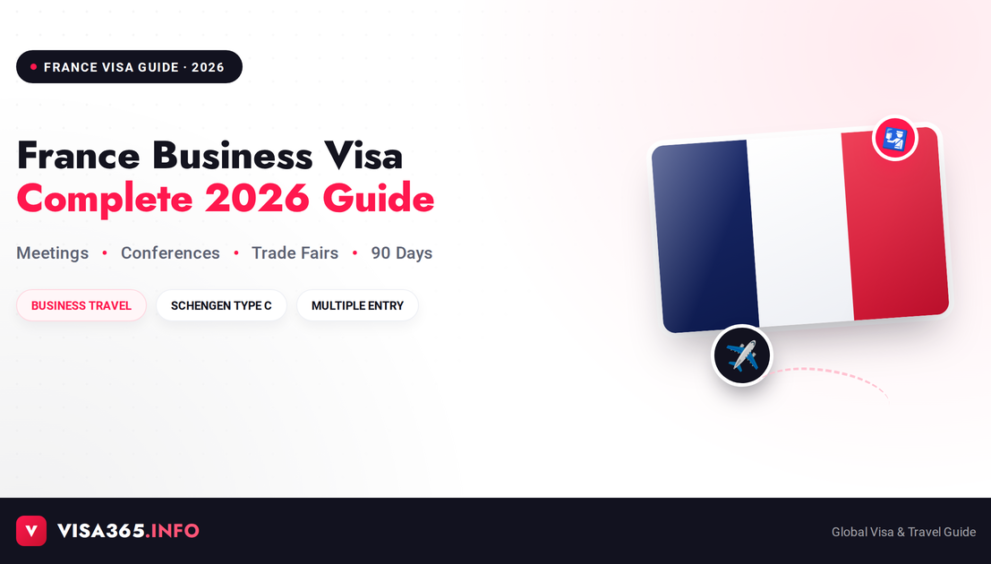
Travelling to France for a client meeting, a trade fair, a conference, or a short professional assignment calls for a specific type of entry permission – commonly referred to as the France Business visa. It isn’t a separate visa category with its own name and rules; it’s a short-stay Schengen visa (Type C) issued for a professional purpose, and it works within the same 90-day framework as tourist and family-visit visas, just with different supporting documents.
This guide explains who needs it, what counts as a qualifying business activity, the documents required, the costs involved, and how the application process works, based on current guidance from France-Visas, the official French government visa portal.
What Is the France Business Visa?
The France Business visa applies to people responding to invitations, summons, or requests from a partner or contact in France – typically to attend a meeting, seminar, conference, or trade fair connected to their professional activity. Like the tourist and family-visit routes, it’s issued as a short-stay Schengen visa, which means it’s valid for travel throughout the Schengen Area, not just France, and covers a maximum stay of 90 days within any 180-day period.
It’s important to understand what this visa doesn’t cover. It is not a work permit, and it does not authorise you to take up paid employment or a long-term professional posting in France. If your trip involves salaried work, a secondment, or an assignment that goes beyond short professional engagements like meetings or conferences, you would typically need a different route – such as a long-stay visa tied to salaried employment, or the Talent Passport for specific categories of skilled professionals and business project holders.
Who Needs a Business Visa for France
As with all short-stay visas, whether you need one depends on your nationality. You generally do not need a visa if you are:
- A citizen of the European Union (EU), European Economic Area (EEA), or Switzerland
- A national of a country on the Schengen visa-waiver list
- A holder of a valid residence permit issued by a Schengen Area state
- A holder of a valid long-stay visa issued by a Schengen Area state
If you don’t fall into one of these categories, you’ll need to apply for a short-stay visa before travelling for business. The France-Visas online wizard will confirm whether your nationality requires a visa and generate a personalised checklist of documents based on your situation.
What Counts as a Qualifying Business Activity
According to France-Visas, this visa is intended for people who are:
- Responding to invitations or requests from business partners established in France
- Attending trade fairs, exhibitions, or industry events
- Participating in seminars, conferences, or corporate meetings
- Carrying out short, defined professional assignments connected to work outside France
The key requirement is that you can demonstrate the link between your professional activity and the purpose of your trip. In other words, immigration authorities want to see clear evidence that your visit is genuinely work-related and time-limited, not a disguised attempt at longer-term or unauthorised employment in France.
Eligibility Requirements
Beyond proving a genuine business purpose, applicants are generally expected to show:
- Sufficient financial means to cover the stay, either personally or through the inviting organisation
- A confirmed return or onward travel itinerary
- Evidence of ties to your home country supporting your intention to leave the Schengen Area before the visa expires
- Valid travel medical insurance covering the whole Schengen Area, typically for at least €30,000 in emergency medical and repatriation costs
Documents You’ll Need
Exact requirements vary depending on your personal and professional situation, and the France-Visas online wizard generates a tailored checklist for your specific case. That said, applicants for a business trip should generally be prepared to provide:
- A valid passport, issued within the last 10 years and valid for at least 3 months beyond your planned departure from the Schengen Area
- A completed visa application form
- Passport-style photographs meeting Schengen visa specifications
- Evidence of travel medical insurance covering the Schengen Area
- A return or onward travel itinerary
- Confirmed accommodation details for your stay
Documents Specific to Business Travel
To support the professional purpose of your trip, France-Visas guidance points to the following as typical evidence:
- A request letter, summons, or invitation from your contact or partner in France, accurately describing the activity, its purpose, duration, and location (for example, the specific meeting, seminar, or conference)
- Failing that, admission cards or registration confirmations for trade fairs or conferences you plan to attend
- Failing that, a written commitment from the inviting organisation or company to cover your costs during the stay
If your employer is sending you, it’s also worth including a letter from them confirming your role, the purpose of the trip, and that you’ll return to your position afterwards, even though this isn’t always formally required – it helps establish the professional and temporary nature of your visit.
Fees and Costs
The standard short-stay Schengen visa fee, which applies to the France Business visa, is:
- €90 for applicants aged 12 and over
- €45 for children aged 6 to 12 (less common for business travel, but relevant if a minor is included on a family-linked trip)
- Free for children under 6, and for certain exempt categories such as family members of EU/EEA or Swiss nationals
If you apply through an external service provider such as VFS Global or TLS Contact rather than directly at a consulate, expect an additional service fee on top of the official visa fee, which varies by location. Visa fees are generally non-refundable, regardless of the outcome of your application.
How to Apply
Step 1: Confirm Your Requirements
Start with the France-Visas portal. The online wizard will confirm whether you need a visa and generate a personalised list of supporting documents for a business trip.
Step 2: Complete the Online Application
Create an account, fill in the application form, and upload your photo where required. You’ll then book an appointment at a French consulate or an authorised visa application centre, depending on your location.
Step 3: Attend Your Appointment
At your appointment, you’ll typically provide biometric data – 10 fingerprints and a facial photograph – along with your supporting documents. If your biometrics were already captured for a Schengen visa within the last 59 months, you may not need to repeat this step.
Step 4: Pay the Fee and Await a Decision
Processing generally takes around 15 calendar days, though this can extend during busy periods or if further checks are required. If your trip involves multiple Schengen countries, apply through the country where you’ll spend the most time on the trip, or your first point of entry if no single country stands out as the main destination.
Multiple-Entry Visas for Frequent Business Travellers
If you travel to France regularly for work, you may be eligible for a multiple-entry visa, sometimes called a “circulation visa,” valid for anywhere from 6 months up to 5 years. This allows repeated business trips without reapplying each time, provided you stay within the cumulative limit of 90 days per 180-day period throughout the visa’s validity. Eligibility generally depends on demonstrating a genuine need for frequent travel and a track record of complying with the terms of previous visas.
What You Cannot Do on a Business Visa
A short-stay Business visa does not allow you to:
- Take up paid employment or a salaried position in France
- Undertake a long-term work assignment or secondment
- Settle in France or convert your status from within the country
- Stay beyond the 90-day limit within any 180-day period
If your professional plans in France go beyond short meetings, conferences, or assignments – for example, if you’re being posted to a French office or taking up salaried work – you’re would need to apply for the appropriate long-stay visa category instead, such as a salaried employment visa or the Talent Passport, before travelling.
For an overview of other France visa categories if your situation doesn’t fit the short-stay business route, it’s worth comparing your options before applying.
Frequently Asked Questions
Can I take up paid work in France on a Business visa?
No. This visa is strictly for short, professional activities such as meetings, conferences, and trade fairs. It does not authorise paid employment, and any income-generating work beyond these limited activities would require a different visa category.
How long can I stay in France on a Business visa?
Up to 90 days within any 180-day period, the same limit that applies across the whole Schengen Area for short-stay visas. If your assignment needs more time than that, you’ll need to apply for a long-stay visa instead.
What documents prove the business purpose of my trip?
Typically, an invitation or request letter from your French contact describing the activity, purpose, duration, and location, or admission confirmation for a trade fair or conference. If neither is available, a written commitment from the inviting organisation to cover your costs can also support your application.
Do I need travel insurance for a Business visa?
Yes. You’ll need travel medical insurance valid across the Schengen Area, typically covering at least €30,000 for medical emergencies and repatriation, for the full length of your trip.
Can my employer pay for my trip instead of me?
Yes. If the inviting organisation or your employer is covering your costs, this can be documented through a formal letter confirming the arrangement, which forms part of your supporting evidence.
Is the Business visa the same as a work visa?
No. The Business visa is a short-stay visa for temporary professional activities like meetings and conferences. A work visa, by contrast, is a long-stay route tied to salaried employment or a longer professional posting, and involves a different application process.
Can I attend multiple business events on a single visa?
Yes, as long as all your activities fall within the professional purpose stated in your application and within your permitted 90-day stay. If your plans change significantly after applying, it’s worth checking whether your existing documentation still supports the new activities.
What happens if my business trip runs longer than expected?
This visa cannot generally be extended for the purpose of continuing short-term business activities. If your assignment is genuinely extending into a longer engagement, you should look into the appropriate long-stay visa route before your permitted stay runs out, rather than trying to extend from within France.
Disclaimer: This guide is for general informational purposes only and does not constitute legal advice. Visa requirements may change. Always verify with official government sources.
Was this article helpful?
Thanks for your feedback 💛 It helps us improve our guides.