














US Nonimmigrant Visas: A Guide to Temporary Visa Categories
-
Anum Naeem / 2 months
- August 28, 2026
- 11 min read

Anyone researching how to travel to the United States runs into the same piece of vocabulary almost immediately: nonimmigrant visa. It sounds like a single thing, but it’s actually an umbrella term covering more than 20 different visa types, each tied to a specific purpose – tourism, study, temporary work, media assignments, and more. Understanding where your situation fits is the first real step in any U.S. visa application.
This guide explains what a nonimmigrant visa is, how the main categories differ, what the general application process looks like, and where to go next depending on your purpose of travel.
What Is a Nonimmigrant Visa?
A nonimmigrant visa allows a foreign citizen to travel to the United States temporarily for a specific, defined purpose – as opposed to an immigrant visa, which is for people intending to live in the U.S. permanently. The type of visa you need is determined by why you’re traveling, not simply how long you plan to stay.
A few concepts are worth understanding upfront:
- The visa is not a guarantee of entry. Holding a valid visa allows you to travel to a U.S. port of entry and request admission, but a Customs and Border Protection (CBP) officer makes the final admission decision and sets your authorized period of stay.
- Visa validity and length of stay are different things. A visa’s expiration date only reflects how long you can use it to seek entry into the U.S., not how long you’re allowed to remain once admitted. Your authorized stay is recorded on Form I-94, issued at the port of entry.
- Multiple-entry visas allow repeat trips. If your visa permits multiple entries and hasn’t expired, you can generally travel to the U.S. more than once for the same purpose, provided you remain eligible.
Main Categories of Nonimmigrant Visas
Nonimmigrant visas are generally grouped by the purpose of travel. Here’s how the major categories break down.
Tourism and Business Visits
The B-1/B-2 visa covers short-term visits that aren’t tied to formal study or employment:
- B-1 – business visitors, for activities like consulting with business associates, attending a conference, negotiating a contract, or settling an estate
- B-2 – tourism, visiting family and friends, or medical treatment
- B-1/B-2 – a combined visa covering both purposes on a single trip
B visa holders generally cannot work for a U.S. employer or study toward a degree while in the U.S. Activities like short recreational courses not taken for credit, or unpaid participation in amateur sports or cultural events, are typically allowed, but formal employment or degree study is not.
Study and Exchange
Students and exchange visitors fall under a separate set of categories, each tied to a Student and Exchange Visitor Information System (SEVIS)-approved program:
- F-1 – academic students enrolled in universities, colleges, and other academic institutions
- M-1 – vocational or non-academic students, such as those in technical or trade programs
- J-1 – exchange visitors, covering categories like scholars, professors, researchers, interns, trainees, and summer work travel participants
Before applying for any of these visas, you must first be accepted by a SEVIS-approved school or program sponsor, who issues the documentation (Form I-20 for F-1/M-1, Form DS-2019 for J-1) that you’ll need for your visa application. For a closer look at the F-1 and M-1 application steps, see our US student visa guidelines.
Temporary Employment
Working in the U.S. temporarily as a nonimmigrant requires qualifying for a specific employment-based category, most of which require an employer-sponsored petition approved by USCIS before you can apply for the visa itself:
- H visas – including H-1B for specialty occupations, and H-2A/H-2B for temporary agricultural and non-agricultural workers
- L visa – intracompany transferees moving within the same multinational organization
- O visa – individuals with extraordinary ability in their field
- P visas – athletes, artists, and entertainers, including reciprocal exchange and culturally unique programs
- Q visa – international cultural exchange programs
- E visas – treaty traders and treaty investors, based on a qualifying treaty between the U.S. and the applicant’s country
- R visa – temporary religious workers
For most of these categories, the employer must file a petition with USCIS (and in some cases first obtain a labor certification from the Department of Labor) before the employee can apply for the visa at a consulate.
Media and Journalism
The I visa covers representatives of foreign media, press, radio, and film who are traveling to the U.S. to gather or produce news and informational content for a foreign-based organization. Unlike most employment categories, it doesn’t require a USCIS petition – applicants apply directly at a consulate.
Transit and Crewmembers
Two narrower categories cover people who are briefly in the U.S. without a broader travel purpose:
- C visa – for travelers in immediate and continuous transit through the U.S. to another country, including subcategories for United Nations transit (C-2) and foreign government officials (C-3)
- D visa – for crewmembers working aboard a commercial sea vessel or international airline that lands or docks in the U.S.
Other Notable Categories
A handful of additional categories cover more specific circumstances:
- K visas – fiancé(e)s and spouses of U.S. citizens preparing to complete the immigration process
- T and U visas – for victims of human trafficking and certain crimes, respectively
- S visas – for witnesses and informants assisting law enforcement
- TN status – for certain Canadian and Mexican professionals under the USMCA (formerly NAFTA)
Required Documents
Documentation requirements vary by category, but most nonimmigrant visa applications share a common foundation:
- A completed Form DS-160, the online nonimmigrant visa application, for nearly all categories
- A valid passport, generally valid for at least six months beyond your intended stay, unless your country has a specific exemption arrangement
- Your DS-160 confirmation page
- A recent photo meeting the Department of State’s photo requirements
- Evidence supporting your specific purpose of travel – for example, an employer petition approval notice for work visas, a Form I-20 or DS-2019 for study and exchange visas, or proof of a home office abroad for media visa applicants
- Evidence of ties to your home country and intent to depart the U.S. after your authorized stay, particularly for visitor and student categories
Application Process
While each category has its own specific steps, the general nonimmigrant visa application process follows a similar pattern:
- Determine the correct visa category based on your purpose of travel. Choosing the wrong category is one of the most common causes of delay or denial.
- Complete any required pre-visa approval, such as a USCIS-approved petition for employment categories or program acceptance for study and exchange visas.
- Complete Form DS-160 online through the Department of State’s Consular Electronic Application Center (CEAC).
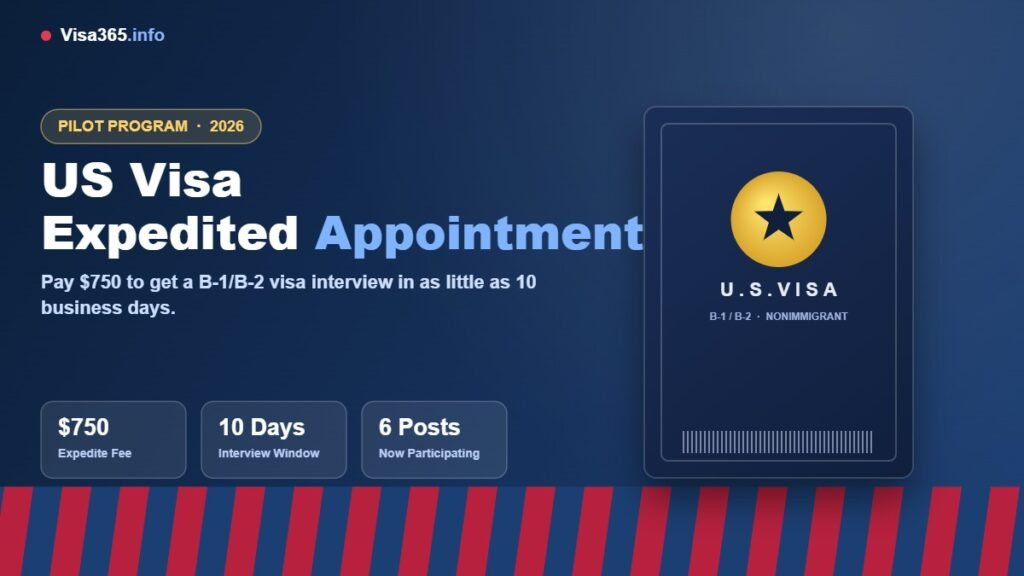
- Pay the visa application (MRV) fee and schedule your interview at the U.S. embassy or consulate with jurisdiction over your place of residence. If your consulate’s earliest available slot doesn’t fit your timeline, it’s worth checking whether the expedited appointment pilot program applies to your case.
- Attend your visa interview, bringing your passport, DS-160 confirmation page, and category-specific supporting documents.
- Receive the consular officer’s decision. Some applicants, such as certain children and older travelers, may be eligible to skip the in-person interview requirement, at the consular officer’s discretion.
Costs
Nonimmigrant visa application fees are tiered by category under the Department of State’s fee schedule:
- Non-petition-based categories (including B, C, D, F, I, J, M, TN/TD): $185
- Petition-based temporary worker categories (H, L, O, P, Q, R): $205
- Treaty trader/investor (E) category: $315
- K fiancé(e)/spouse category: $265
For employment-based categories requiring a petition, the employer typically pays a separate Form I-129 filing fee to USCIS, which is distinct from the visa application fee paid to the Department of State. Depending on your nationality, an additional reciprocity-based visa issuance fee may also apply. Because fees change periodically, always confirm the current amounts on the official U.S. Department of State fee schedule and USCIS fee schedule before applying.
Choosing the Right Category
With more than 20 nonimmigrant categories available, picking the right one comes down to answering a few honest questions about your trip:
- What is the primary purpose of your travel? Tourism and casual visits point to B-2; a job offer points to an employment category; university admission points to F-1.
- Is your activity paid or unpaid, and who benefits from it? Paid work for a U.S. employer generally requires an employment-based visa, even if your trip also involves other short-term activities.
- Does your travel require approval from another agency first? Many employment and study categories require a petition, labor certification, or program acceptance before you can apply for the visa.
- How long do you actually need to stay, and does that match the category’s rules? Some categories, like C and D, come with strict, short maximum stays, while others allow duration of status tied to an ongoing activity.
If you’re unsure which category fits, reviewing the requirements for your likely category – and, where relevant, comparing it against a neighboring one – is worth doing before you invest time in gathering documents or scheduling an interview.
Key Takeaways
Nonimmigrant visas exist to match a temporary travel purpose to a specific, well-defined visa category, rather than offering one general-purpose “US visa.” Getting the category right from the start – and understanding whether it requires a petition, program acceptance, or direct consular application – saves time and avoids the kind of mismatched paperwork that leads to delays or denials. Whatever your reason for traveling, there’s very likely a nonimmigrant category built specifically for it.
Frequently Asked Questions
What’s the difference between a nonimmigrant visa and an immigrant visa?
A nonimmigrant visa is for temporary travel to the U.S. for a specific purpose, such as tourism, study, or temporary work, with the expectation that you’ll depart when your authorized stay ends. An immigrant visa is for people intending to live permanently in the U.S., typically based on family ties, employment sponsorship, or the diversity visa program.
Does having a valid visa guarantee I can enter the United States?
No. A visa allows you to travel to a U.S. port of entry and request admission, but a Customs and Border Protection officer makes the final decision on whether to admit you and for how long. Admission can be denied even with a valid visa.
How long can I stay in the US on a nonimmigrant visa?
It depends entirely on the category and what’s recorded on your Form I-94 at the port of entry, not on your visa’s expiration date. Some categories allow a fixed number of days, others allow “duration of status” tied to an ongoing activity like school enrollment or employment, and a few – like the C transit visa – have strict short-term limits.
Can I work in the United States on a B-1/B-2 visitor visa?
No. Visitor visas don’t authorize employment with a U.S. employer or enrollment in a degree program. If your purpose of travel involves paid work or formal study, you’ll need the appropriate employment or student visa category instead.
Do all nonimmigrant visa categories require a USCIS petition?
No. Categories like B (visitor), F/M (student), J (exchange visitor), I (media), and C/D (transit and crewmember) generally don’t require a USCIS petition – you apply directly at a consulate. Most employment-based categories, such as H, L, O, and P, do require an employer-filed petition approved by USCIS before you can apply for the visa.
How much does a nonimmigrant visa cost?
Most non-petition-based categories carry a $185 application fee, while petition-based temporary worker categories are $205, and treaty trader/investor (E) visas are $315. Employers filing petitions for employment-based categories also pay separate USCIS filing fees. Always check the official Department of State and USCIS fee schedules for current amounts.
Can I switch from one nonimmigrant category to another while in the United States?
In some cases, yes, by filing Form I-539, Application to Extend/Change Nonimmigrant Status, with USCIS. However, not every category allows a change of status – transit (C) visa holders, for example, generally cannot change to another nonimmigrant category while in the U.S.
Which visa do I need if I’m not sure my situation fits neatly into one category?
Start with your primary purpose of travel, since that determines the category, not incidental activities you might also do during the trip. If your situation genuinely straddles two purposes – for example, business and tourism – a combined category like B-1/B-2 may apply. For more complex situations, reviewing the specific requirements for each candidate category, or speaking with an immigration attorney, is worth the time before applying.
Disclaimer: This guide is for general informational purposes only and does not constitute legal advice. Visa requirements may change. Always verify with official government sources.
Was this article helpful?
Thanks for your feedback 💛 It helps us improve our guides.