





















Spain Tourist Visa: Requirements, Cost, and How to Apply
-
Adeel Gulzar / 2 months
- August 14, 2026
- 9 min read


Spain is one of the most visited countries in Europe, drawing travelers with its beaches, historic cities, food, and vibrant culture. If you’re a non-EU national planning to visit for a holiday, to relax, or to see family and friends, you may need a Spain Tourist Visa before you can board your flight. This visa falls under the Schengen visa system and is specifically meant for short leisure stays, not for work or long-term residence.
This guide covers who needs a Spain tourist visa, what documents you’ll need, how much it costs, and how the application process works from start to finish.
What Is the Spain Tourist Visa?
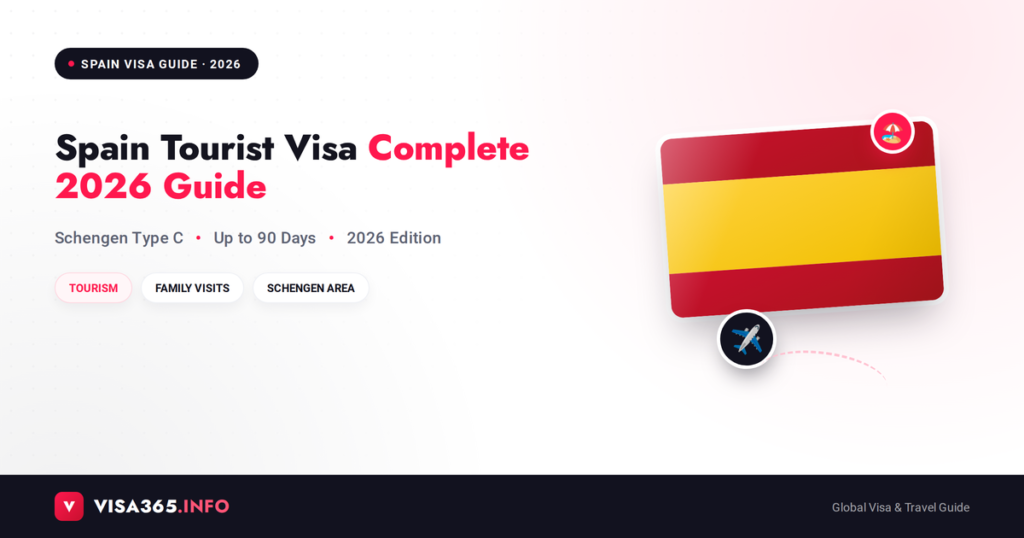
The Spain Tourist Visa is a short-stay Schengen Visa Category C, issued for tourism, leisure travel, or visits to family and friends. It allows entry into Spain and, because Spain is part of the Schengen Area, travel across other Schengen countries during the same trip, for a maximum stay of 90 days within any 180-day period.
Importantly, this visa does not permit any kind of work, whether paid employment, self-employment, or remunerated professional activity. It’s strictly for leisure and personal visits. If your trip involves business meetings, conferences, or short professional engagements, those purposes are still generally covered under the same Type C short-stay visa category, but any form of paid work in Spain requires a completely different work authorization and visa, arranged in advance by an employer.
The legal basis for the Spain tourist visa is the EU Visa Code (Regulation 810/2009), which governs short-stay visas across the entire Schengen Area.
Who Needs a Spain Tourist Visa?
Whether you need a visa to visit Spain depends on your nationality. Citizens of the European Union, Iceland, Liechtenstein, Norway, and Switzerland can enter and travel within Spain using only their national ID card or valid passport. Nationals of many other countries can enter visa-free for short stays under existing agreements with the EU.
However, travelers from a significant number of countries do require a visa to visit Spain, even for a short holiday. If you’re unsure whether your nationality requires a visa, the safest way to confirm is by checking the official entry requirements published by Spain’s Ministry of Foreign Affairs or the nearest Spanish consulate.
Separately, from the last quarter of 2026, travelers from visa-exempt countries will need to obtain ETIAS authorization before entering Spain and other Schengen countries. ETIAS is not a visa; it’s a simpler, lower-cost online travel authorization, and it doesn’t apply if your nationality already requires a traditional Schengen visa.
Spain Tourist Visa Requirements
While specific document checklists can vary slightly by consulate, a standard Spain tourist visa application generally requires the following:
- A valid passport, issued within the last 10 years and valid for at least three months beyond your planned departure from the Schengen Area, with at least two blank pages
- A completed and signed Schengen visa application form
- Recent passport-sized photographs meeting Schengen photo specifications
- Travel medical insurance covering the entire Schengen Area, with a minimum coverage of €30,000 for medical expenses and repatriation
- Proof of accommodation, such as a confirmed hotel booking, or an official invitation letter if staying with family or friends
- Proof of round-trip transportation, such as a flight reservation or itinerary
- Proof of sufficient financial means for the length of your stay
- Proof of purpose of travel, such as an invitation letter for family visits or a tour confirmation for organized trips
- Proof of ties to your home country, such as employment or property, showing your intention to return after the trip
Proof of Financial Means
Spain sets a minimum daily amount that visitors must be able to show they have access to during their stay. As of 2026, this is €122 per day, or a minimum of €1,099 if the trip lasts nine days or longer. This can be shown through cash, traveler’s cheques, a credit card with a recent bank statement, or another document proving available funds.
Invitation Letters for Family and Friend Visits
If you’re visiting family or friends rather than staying in a hotel, you’ll typically need an official invitation letter. In most cases, this letter needs to be issued or certified by the local Police Office (Oficina de Extranjería) in the host’s place of residence in Spain, and then sent to the applicant. If the host is a non-resident property owner, additional documents such as proof of property ownership and a signed invitation letter may be required instead.
Spain Tourist Visa Cost
The standard Schengen short-stay visa fee applies to the Spain tourist visa, which is €90 for adults. Reduced fees apply for children aged 6 to 12, and children under 6 are exempt from the fee entirely. This is set by EU regulation and applies uniformly regardless of which Schengen country you’re applying to visit.
If you apply through an external visa application center rather than directly at a consulate, an additional service fee typically applies on top of the official visa fee. Visa fees are generally non-refundable, even if the application is denied, so it’s worth ensuring your documents are complete and accurate before submitting.
How to Apply for a Spain Tourist Visa
Step 1: Confirm Where to Apply
Apply at the Spanish consulate or visa application center in your country of legal residence. In many countries, Spain uses external partners such as VFS Global or BLS International to handle biometric collection and document submission on the consulate’s behalf.
Step 2: Complete the Application Form
Fill out the official Schengen visa application form accurately, ensuring the details match your passport and supporting documents exactly.
Step 3: Gather Your Documents
Collect your passport, photos, travel insurance, accommodation proof, financial evidence, and any invitation letters required for your specific purpose of travel. If any documents aren’t in Spanish or English, they may need to be translated by a certified/sworn translator.
Step 4: Book Your Appointment
Schedule your visa appointment as early as possible. In high-demand locations, appointment slots can fill up weeks in advance, so applying several weeks to a couple of months before your planned travel date is generally advisable.
Step 5: Attend Your Appointment in Person
Submit your documents, provide biometric data (fingerprints and photograph) if required, and pay the applicable visa fee at the consulate or application center.
Step 6: Wait for Processing
Standard Schengen visa processing time is around 15 calendar days, though it can extend up to 30 or 45 days in certain cases. Applying well ahead of your trip helps you avoid last-minute issues.
Step 7: Collect Your Visa
Once approved, collect your passport with the visa affixed, and check the validity dates, number of permitted entries, and maximum duration of stay before you travel.
Spain Tourist Visa vs Other Visa Types
It’s worth understanding how the tourist visa compares to other visa categories, especially if your plans might extend beyond a short holiday:
- Tourist/Short-Stay Visa (Type C): For holidays, family visits, and leisure travel up to 90 days. No work permitted.
- National (Long-Stay) Visa: Required for stays longer than 90 days, such as studying, working, or family reunification. This is a different application process altogether, handled separately from the tourist visa.
- Work Visa: Requires prior authorization and a job offer from a Spanish employer before a visa can even be applied for. A tourist visa cannot be converted into work authorization while in Spain.
If you’re considering studying in Spain, whether at the undergraduate, master’s, or doctoral level, or enrolling in a language program or vocational course longer than 90 days, you’ll need to apply for a national student visa, not a tourist visa, and the required documents differ significantly.
Frequently Asked Questions
Can I work in Spain on a tourist visa?
No. The Spain tourist visa strictly prohibits any paid work, including employment, self-employment, or freelance activity. Working on this visa is a violation of its terms and can affect future visa applications.
How long can I stay in Spain on a tourist visa?
The Spain tourist visa allows stays of up to 90 days within any 180-day period, and this applies across the entire Schengen Area, not just Spain.
How much does a Spain tourist visa cost?
The standard fee is €90 for adults, with reduced or waived fees for children depending on age. Additional service fees may apply if you use an external visa application center.
Do I need travel insurance to apply?
Yes. Travel insurance covering the whole Schengen Area, with a minimum medical coverage of €30,000 including repatriation, is a mandatory requirement for the application.
How much money do I need to show for a Spain tourist visa?
As of 2026, Spain requires proof of at least €122 per day of your stay, or a minimum of €1,099 for trips of nine days or longer, shown through bank statements, cash, or similar documentation.
Can a Spain tourist visa be extended?
Short-stay Schengen visas are generally not extendable beyond the 90-day limit within the Schengen Area, except in limited, exceptional circumstances such as documented medical emergencies. Plan your travel dates within the visa’s validity from the outset.
What’s the difference between a tourist visa and ETIAS for Spain?
A tourist visa is required for nationals of countries that need pre-approval to enter Spain and the Schengen Area. ETIAS, becoming mandatory from the last quarter of 2026, is a separate, simpler online authorization for nationals of visa-exempt countries and doesn’t apply if your nationality already requires a traditional visa.
Can I visit multiple Schengen countries on a Spain tourist visa?
Yes, as long as Spain is your main destination or first point of entry, a Spain-issued Schengen visa allows travel across all Schengen countries within the visa’s validity and the 90/180-day limit.
Disclaimer: This guide is for general informational purposes only and does not constitute legal advice. Visa requirements may change. Always verify with official government sources.
Was this article helpful?
Thanks for your feedback 💛 It helps us improve our guides.