


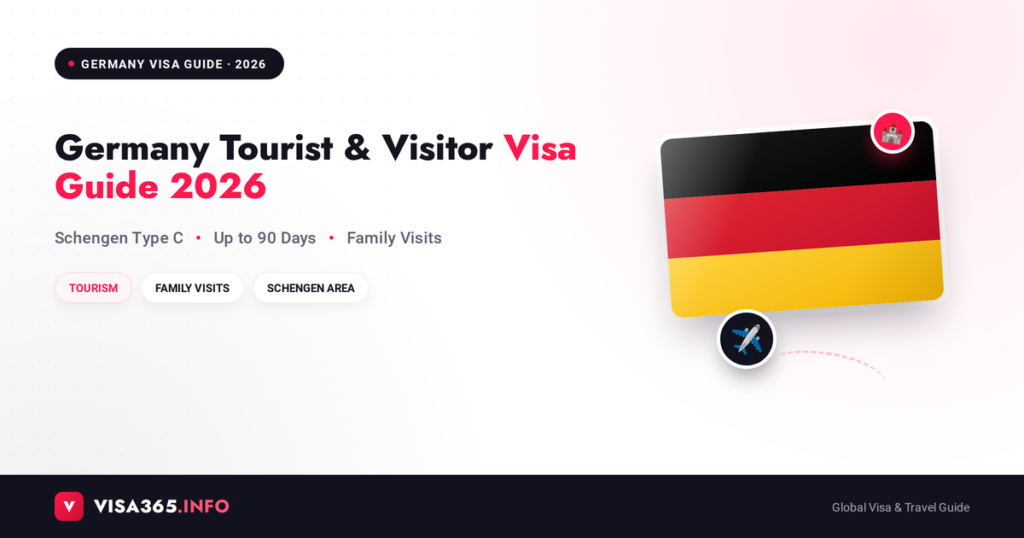




Germany Tourist and Visitor Visa: For Holidays, Sightseeing, or Visiting Family and Friends for Up to 90 Days
-
Anum Naeem / 2 months
- September 7, 2026
- 8 min read

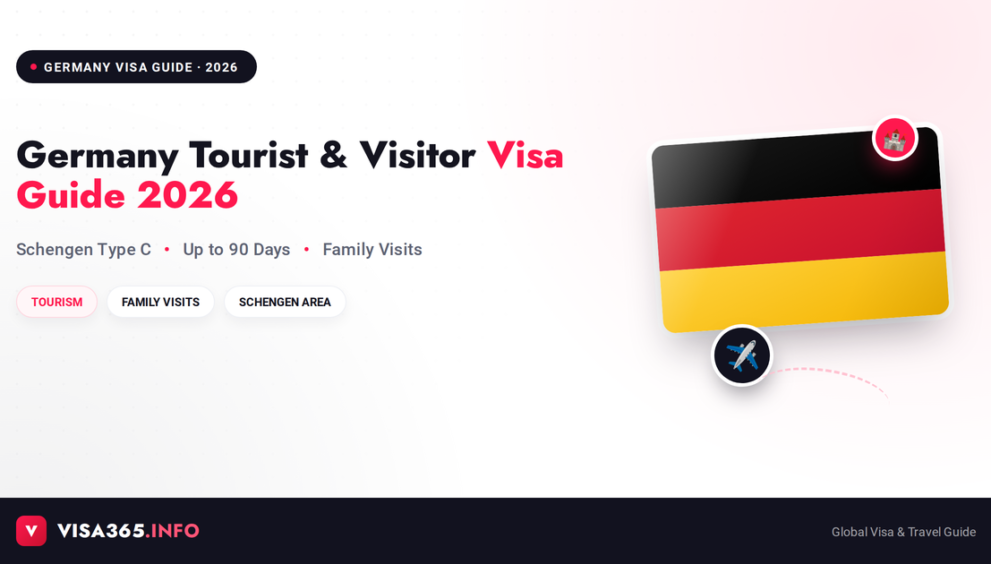
Whether you’re planning a holiday exploring German cities and castles, visiting relatives, or catching up with friends, the Germany Tourist and Visitor visa is the route most travellers need for short stays. It’s officially a Schengen visa (Type C), allowing visits of up to 90 days within any 180-day period, and it covers travel not just to Germany but across the wider Schengen Area.
This guide explains who needs the visa, what documents and requirements apply, the current fees, and how the application process works, based on official guidance from the German Federal Foreign Office.
What Is the Germany Tourist and Visitor Visa?
This visa falls under the general Schengen visa category, used for short stays of up to 90 days for a range of purposes – tourism, sightseeing, and visiting family or friends among them. It’s issued by German missions abroad and, once granted, allows travel throughout the Schengen Area, not just within Germany, for the duration of its validity.
Whether you need a visa at all depends on your nationality. Third-country nationals generally require a visa to enter Germany, with an exemption for EU citizens and nationals of countries covered by the EU’s visa-waiver regulation for short stays. You can check your specific situation through the Federal Foreign Office’s table of visa requirements and exemptions.
Who Needs This Visa
If your nationality requires a visa for short stays, you’ll need to apply before travelling to Germany for:
- Holidays and sightseeing
- Visiting family members or friends
- Short private stays that don’t involve work or settling long-term
If you’re staying for longer than 90 days, or your purpose of travel involves study, work, or family reunification on a longer-term basis, you would need a different route – a national visa rather than the short-stay Schengen visa covered here.
Core Eligibility Requirements
To be granted a Schengen visa for tourism or a private visit, applicants are generally expected to demonstrate:
- A genuine purpose of travel consistent with tourism or a private visit
- Sufficient financial means to cover the stay, whether through personal funds or a sponsor
- A confirmed return or onward travel plan
- Travel medical insurance valid across the whole Schengen Area, typically covering at least €30,000 in emergency medical and repatriation costs
- Evidence of ties to your home country supporting your intention to leave the Schengen Area before the visa expires
Documents You’ll Need
Exact document requirements can vary by consulate and individual circumstances, but applicants for a tourist or visitor visa should generally prepare:
- A valid passport, issued within the last 10 years and valid for at least 3 months beyond your planned departure from the Schengen Area, with blank pages available
- A completed visa application form, which can be filled out online through the Videx portal and printed for your appointment
- Biometric photographs meeting Schengen visa specifications
- Evidence of travel medical insurance covering the Schengen Area
- Confirmed accommodation details, such as a hotel booking, or an invitation letter if staying with family or friends
- A return or onward travel itinerary
- Proof of financial means, such as recent bank statements
For Tourism
If you’re travelling for tourism specifically, you’ll typically also need to show your travel itinerary and accommodation bookings for the length of your stay.
For Family or Friend Visits
If you’re staying with family or friends, you’ll usually need an invitation letter from your host, along with details of your relationship and their address in Germany. If your host is covering some or all of your costs, a formal declaration of commitment from them may also be required.
Fees and Costs
According to the Federal Foreign Office, the standard processing fee for a Schengen visa is €90. Alongside the standard fee, several reductions and waivers apply:
- €45 for children aged 6 to 11
- Free for children under 6
- €35 for nationals of Albania, Armenia, Azerbaijan, Bosnia and Herzegovina, Georgia, Moldova, Montenegro, North Macedonia, Serbia, and Ukraine, where a visa facilitation agreement applies and the applicant is not already visa-exempt
- €67.50 for nationals of Cabo Verde
Visa fees are also waived entirely for certain categories regardless of nationality, including school pupils, undergraduates, postgraduates, and accompanying teaching staff travelling for study or training purposes, along with researchers travelling for a research activity, seminar, or conference under specific EU provisions.
Note: the reduced fee agreements for Belarusian and Russian Federation nationals have been suspended under separate EU Council decisions, so the standard fee applies to these nationalities.
Visa application centers may also charge an additional service fee on top of the official visa fee, which varies depending on the center and any optional services selected. These fees are generally non-refundable, regardless of the outcome of your application.
How to Apply
Step 1: Confirm Your Requirements
Check whether you need a visa using the Federal Foreign Office’s visa requirements table, and use the Visa Navigator tool to confirm exactly which visa type fits your travel purpose.
Step 2: Complete Your Application Form
Fill out the Schengen visa application form online through the Videx portal, then print it to bring to your appointment. Application forms are also available free of charge directly from your local German mission.
Step 3: Book and Attend Your Appointment
Applications are generally submitted in person at the German mission or an authorised visa application center responsible for your place of residence. At your appointment, you’ll provide biometric data – fingerprints and a photograph – pay the application fee, and submit your original supporting documents. If your fingerprints were already captured for a Schengen visa application within the last 59 months, you may not need to provide them again.
Step 4: Wait for a Decision
Processing generally takes up to 15 calendar days for a correctly completed application, though this can extend during busy travel periods. You can apply as early as 6 months before your planned trip, and generally no later than 15 days before you intend to travel, though it’s worth booking your appointment well ahead of that deadline given potential waiting times for appointment slots.
What You Cannot Do on This Visa
A short-stay Tourist/Visitor visa does not allow you to:
- Take up paid employment or engage in business activity in Germany
- Stay beyond the 90-day limit within any 180-day period
- Settle in Germany or convert your status from within the country
- Study on a course requiring a separate long-stay student visa
If your plans change and you need to stay longer, work, or study in Germany, you would need to apply for the appropriate national (D) visa category instead, before your permitted short stay comes to an end.
For an overview of other Germany visa categories if your circumstances don’t fit the short-stay tourist route, it’s worth comparing options before you apply.
Frequently Asked Questions
How long can I stay in Germany on a Tourist/Visitor visa?
You can stay for up to 90 days within any 180-day period, and this limit applies across the whole Schengen Area, not just Germany. If you plan to visit multiple Schengen countries on the same trip, the combined time still counts toward this shared limit.
Do I need travel insurance to apply?
Yes. You’ll need travel medical insurance valid across the Schengen Area, generally covering at least €30,000 for medical emergencies and repatriation, for the full length of your planned stay.
Can I work in Germany on a Tourist/Visitor visa?
No. This visa does not permit any paid employment or business activity. It’s intended strictly for tourism, family visits, and other short private, non-working purposes.
How much does the visa cost?
The standard Schengen visa fee is €90, with reduced fees of €45 for children aged 6 to 11 and free entry for children under 6. Nationals of certain countries with visa facilitation agreements with the EU may pay a reduced fee of €35, or €67.50 for Cabo Verde nationals specifically.
When should I apply for my visa?
You can apply as early as 6 months before your planned trip, and no later than 15 days before your intended travel date. Since appointment slots can be limited, especially during peak seasons, it’s best to book well in advance of your travel dates.
What’s the difference between visiting family and a general tourist trip?
Both fall under the same short-stay Schengen visa category, but the required documents differ slightly. A tourist trip typically needs proof of accommodation and an itinerary, while a family or friend visit usually needs an invitation letter from your host, detailing your relationship and their address in Germany.
Can children apply for this visa, and is there a fee?
Yes, children can be included on a visa application. Children under 6 are exempt from the fee entirely, and children aged 6 to 11 pay a reduced fee of €45, compared to the standard €90 fee for adults.
What happens if I overstay my 90-day limit?
Overstaying the permitted period can lead to penalties, entry bans, or difficulties with future Schengen visa applications. If your circumstances change and you need more time in Germany, you should apply for the appropriate long-stay national visa before your permitted short stay expires, rather than attempting to extend your stay informally.
Disclaimer: This guide is for general informational purposes only and does not constitute legal advice. Visa requirements may change. Always verify with official government sources.
Was this article helpful?
Thanks for your feedback 💛 It helps us improve our guides.