





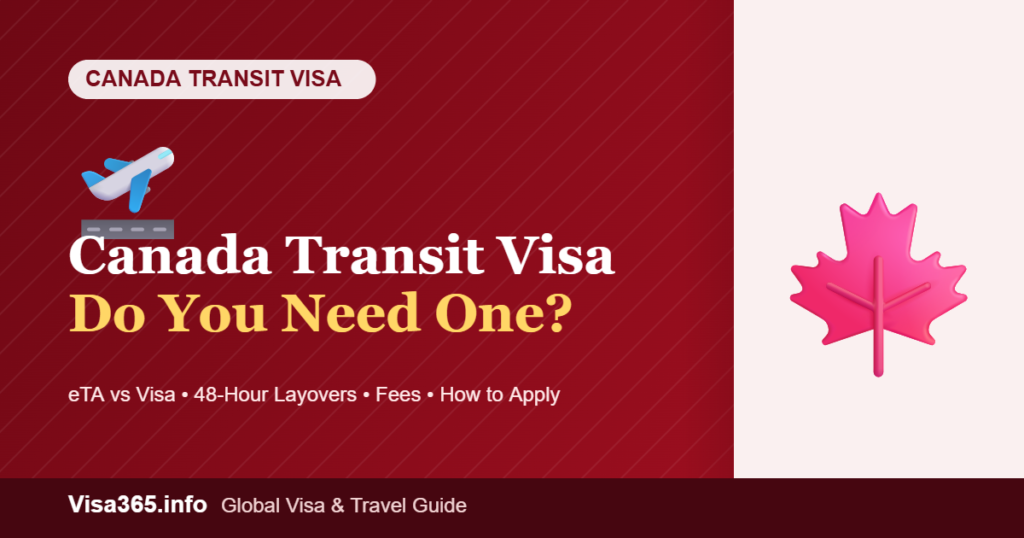











Canada Transit Visa: Do You Need One for Your Layover?
-
Maimona Naeem / 2 months
- August 24, 2026
- 9 min read

If your flight has a layover in Canada on the way to another country, you might need a Canada Transit Visa, though many travelers are surprised to learn they actually need something else entirely, or nothing at all. Canada’s rules for connecting passengers depend heavily on your nationality and how you’re traveling, and getting it wrong can mean missing your connection or being denied boarding.
This guide breaks down exactly when a transit visa applies, how it differs from a regular visitor visa and the eTA, who’s exempt, and how to apply if you need one.
What Is a Canada Transit Visa?
A transit visa allows foreign nationals to pass through a Canadian airport on their way to another country, without needing a full visitor visa for the stopover. It’s designed specifically for travelers who never intend to leave the airport’s international transit area and whose connection lasts 48 hours or less.
This is different from a visitor visa, which is meant for travelers actually entering Canada for tourism, business, or family visits, and different again from the eTA, which is the lightweight electronic authorization used by visa-exempt travelers flying through or into Canada.
Do You Actually Need a Transit Visa?
This is where most of the confusion happens, so it’s worth working through the logic carefully. According to Immigration, Refugees and Citizenship Canada (IRCC), you generally need a transit visa when all of the following apply:
- Your international flight stops at a Canadian airport on the way to another country, or you’re connecting between two international flights at one or more Canadian airports
- Your transit through Canada lasts 48 hours or less
- You don’t already hold a valid visitor visa
- You’re not eligible for an eTA
If any of those conditions doesn’t apply to you, such as your layover running longer than 48 hours or you already holding a valid Canadian visitor visa, you’ll need a different document instead, most likely a full visitor visa.
Transit Visa vs. eTA vs. Visitor Visa: Which One Applies to You?
The document you need depends primarily on your nationality and, in some cases, how you’re traveling:
| Your Situation | What You Need |
|---|---|
| Citizen of a visa-exempt country, flying through Canada | eTA (Electronic Travel Authorization) |
| Citizen of a visa-required country, connecting flights, 48 hours or less | Transit Visa |
| Citizen of a visa-required country, staying longer than 48 hours or leaving the airport | Visitor Visa |
| U.S. citizen or lawful U.S. permanent resident | No visa or eTA required, regardless of travel mode |
| Transiting by land or sea (car, bus, train, boat, cruise ship) | Generally no eTA or transit visa required, though valid travel documents are still needed |
If you hold a passport from a country like the United Kingdom, Australia, Germany, Japan, or most EU nations, you’re on the visa-exempt list, which means you need an eTA, not a transit visa, to fly through a Canadian airport. The eTA costs CAD $7 and is usually approved within minutes, though it can occasionally take longer.
It’s also worth noting that the length of your layover doesn’t change which category of document you need. Whether you’re on the ground for two hours or overnight, Canada generally treats any air connection the same way: you need either an eTA or a visa to pass through, depending on your nationality.
Transit Without Visa (TWOV) Program
Some travelers connecting to or from the United States may qualify for the Transit Without Visa (TWOV) Program, which allows eligible passengers to pass through a Canadian airport without a Canadian transit visa. You don’t apply for TWOV directly; instead, your airline verifies your eligibility before you’re allowed to board your flight to Canada.
To qualify for travel via the United States under this program, you generally need documents such as a valid U.S. visa, among other specific conditions depending on your nationality and itinerary. Citizens of certain countries, including Indonesia, the Philippines, Thailand, and Taiwan, face specific rules under this program, and if the conditions aren’t met, a standard transit visa or eTA may be required instead.
It’s important to understand that TWOV eligibility can be lost mid-journey. If you miss your connecting flight in Canada or are refused entry to the United States, you’re no longer exempt from needing a visa, and you’ll need to see a Canada Border Services Agency (CBSA) officer before continuing your travels.
Who Is Exempt From Needing a Canada Transit Visa?
You do not need a transit visa if you fall into any of these categories:
- You are a citizen of Canada
- You are a U.S. citizen or lawful permanent resident of the United States, transiting by air, car, bus, train, or boat
- You are from a visa-exempt country (you’ll need an eTA instead, for air travel)
- You already hold a valid Canadian visitor visa
- You are transiting by land or sea, such as by train, bus, boat, or cruise ship, rather than by air
Documents Required for a Canada Transit Visa
If you do need to apply, prepare the following:
- Valid passport, covering the duration of your travel
- Confirmed travel itinerary showing your connecting flights
- Proof of onward travel, such as your ticket to your final destination
- Valid visa for your final destination country, if required
- Digital photo meeting IRCC’s specifications
- Any additional documents requested based on your specific nationality and travel plans
Canada Transit Visa Cost
The transit visa itself is free. Unlike a regular visitor visa, which carries a $100 CAD government fee, there is no processing fee for a standard transit visa application. If your situation instead requires an eTA, that carries a small $7 CAD fee, while a full visitor visa carries the standard $100 CAD fee plus biometrics if applicable.
How to Apply for a Canada Transit Visa: Step-by-Step
- Confirm you actually need a transit visa, rather than an eTA or visitor visa, based on your nationality and travel plans.
- Check whether the Transit Without Visa Program applies to your itinerary, particularly if you’re connecting through Canada to or from the United States.
- Gather your documents, including your passport, travel itinerary, and proof of onward travel.
- Submit your application online through the official IRCC website. Most applicants complete the process in about 15 to 20 minutes when all required documents are ready.
- Wait for a decision. Canada has worked to streamline transit visa processing to reduce delays for legitimate travelers, though timelines can still vary.
- Travel with your approved transit visa, along with your passport and onward travel documents, and proceed directly through the airport’s international transit area.
Since a transit visa only covers stopovers of 48 hours or less inside the airport’s transit area, holders are generally not permitted to leave the airport during their layover unless they have another valid Canadian visa or authorization.
Benefits of Understanding the Transit Visa System
Getting this right before you travel offers real, practical advantages:
- Avoiding denied boarding, since airlines are required to verify you have the correct document before you fly
- No cost, unlike a visitor visa, since the transit visa itself carries no government fee
- Faster processing compared to a full visitor visa application, since the transit visa is designed specifically for short connections
- Clarity for multi-leg journeys, especially for travelers connecting through major hubs like Toronto Pearson or Vancouver International on their way to a final destination
- Reduced risk of scams, since knowing the correct official process helps you avoid third-party websites charging inflated fees for what should be a free or low-cost application
Frequently Asked Questions (FAQs)
How long can I stay in Canada with a transit visa?
A transit visa covers layovers of 48 hours or less. If your connection is longer than that, or if you plan to leave the airport, you’ll need a full visitor visa instead of a transit visa.
Is the Canada transit visa free?
Yes. Unlike a regular visitor visa, which costs $100 CAD, the transit visa itself has no government processing fee. If you’re eligible for an eTA instead, that costs a small $7 CAD fee.
Do U.S. citizens need a transit visa for Canada?
No. U.S. citizens and lawful permanent residents of the United States can transit through Canada without a visa or eTA, regardless of whether they’re traveling by air, car, bus, train, or boat.
What’s the difference between a transit visa and an eTA?
A transit visa is for citizens of visa-required countries connecting through a Canadian airport for 48 hours or less. An eTA is for citizens of visa-exempt countries flying through or into Canada. Which one you need depends entirely on your nationality, not on how long your layover is.
Do I need a transit visa if I’m arriving by train, bus, or boat?
Generally, no. The transit visa and eTA requirements are primarily tied to air travel. If you’re transiting through Canada by land or sea, including by cruise ship, you typically don’t need either document, though you still need to carry valid travel documents for your journey.
What happens if I miss my connecting flight in Canada?
If you’re using the Transit Without Visa (TWOV) Program and miss your connecting flight, or are refused entry to the United States, you lose your exemption from needing a visa. You’ll need to be examined by a Canada Border Services Agency officer before you can continue your travels.
Can I leave the airport during my transit visa layover?
No. Transit visa holders are generally not permitted to leave the airport during their layover, unless they hold another valid Canadian visa or authorization that allows entry into the country.
How do I know if I qualify for the Transit Without Visa Program?
Eligibility depends on your nationality and itinerary, and generally requires documents such as a valid U.S. visa if you’re connecting to or from the United States. Your airline is responsible for verifying your eligibility before you board, so it’s worth confirming your documents meet the requirements well before your travel date.
This article is intended for general informational purposes only. Canada’s transit and immigration rules are updated periodically by IRCC, so always verify the latest details on the official canada.ca website before you travel.
Disclaimer: This guide is for general informational purposes only and does not constitute legal advice. Visa requirements may change. Always verify with official government sources.
Was this article helpful?
Thanks for your feedback 💛 It helps us improve our guides.